


These pups have had a ruff go of it.
A favorite dog breed across the US and UK will disappear in the next 10 years, and animal rights groups couldn’t be happier to see them go.
So-called “designer dogs” like pugs, French bulldogs and English bulldogs have been bred with features —flat faces, bulging eyes and wrinkly skin — which can lead to health issues and potential suffering, including high risk of infections, impaired mobility and respiratory problems. Many are even forced into surgery to help them breathe properly.
Now, breeders are making moves to right these anatomical wrongs, which came about over a century ago.
On Tuesday, scientists launched a toolkit called the innate health assessment (IHA) to assess a dog based on 10 traits — merle coloration (a mottled or marbled coloring), wrinkly skin, flat faces, saggy or out-turned eyelids, bulging eyes, under or overbite, no tail, twisted legs, shortened legs and stiff spines.
“This tool is a valuable contribution to reducing the chronic ill-health associated with extreme conformations in dogs,” Professor Lord Trees, co-chairman of the APGAW, told the Telegraph.
“The fashion for extreme conformation is arguably the most chronic and prevalent welfare issue in dogs … yet it persists in plain sight in a nation of animal lovers.”
Studies have revealed that animals born with these kinds of traits suffer from pain, discomfort and frustration from birth.
Under licensing requirements for official breeders, only dogs with a health assessment score of eight or above will be allowed to be bred at launch. In five years, the criteria will tighten to nine, then all 10 in a decade.
“The plan here is that in 10 years time, there will not be a single dog bred in the UK by a licensed breeder that has any extreme conformation,” Dr. Dan O’Neill, associate professor of companion animal epidemiology at the Royal Veterinary College, who created the tool, told the Telegraph.

The IHA, developed by the All Party Parliamentary Group for Animal Welfare (APGAW) in the UK, doesn’t want to ban breeds, but rather alter definitions so that animals can be born healthy without issues — which will ultimately lead to a “disruptive action” and “major change” of some breeds.
“The IHA will lead to the default setting of a pug or a dachshund fundamentally changing,” O’Neill said, adding that dog owners have been “brainwashed” into thinking that if a dog is a certain breed, then it’s healthy — even with these harmful features.
“We’re saying that it’s not about breed, it’s about the dog,” he said.
The course of action is voluntary, but the Telegraph reported that it has wide support from charities, insurers and the Kennel Club — and the developers hope to lobby the government to mandate the scheme and use it as a way to enforce a currently unused law that prohibits breeding unhealthy dogs.
“The Kennel Club is committed to the principle that all dogs should have a body shape that enables them to lead a good quality of life,” a Kennel Club spokesman told the Telegraph. “While the Kennel Club was consulted during the development of the IHA, it is important to note that the assessment criteria were not chosen by us.”
“While for most breeds, the assessment criteria will not present any issues, and we reiterate our support for any initiatives that promote the health and well-being of dogs, we believe that a more veterinary-based and nuanced approach could better support our pedigree breeder community.”
Meanwhile, PETA advocates for bans on breeding “intentionally deformed dogs,” including breathing-impaired breeds (BIBs) like pugs and bulldogs.
“People don’t realize that intentionally breeding dogs with flat faces, elongated backs, excessive wrinkles, and other deformities causes constant suffering, so any effort to end this cruel practice is a step in the right direction,” PETA Manager Jakob Shaw said in a statement to The Post.
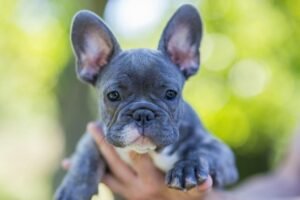
However, some organizations feel differently, arguing that trustworthy dog breeders shouldn’t be punished for the mistakes of bad breeders.
“Claims that popular breeds will ‘disappear’ are alarmist and ignore the fact that these dogs live happy, healthy lives when bred responsibly,” Sandy Moore, CEO of the Pet Advocacy Network, told The Post.
“Responsible breeders have worked with veterinarians and breed clubs for years to have high standards. We don’t need government-mandated redesigns or bans that punish good breeders along with the bad.”